

For this episode, we discussed the dangers of too much oxygen. Just about everyone knows that hypoxia is problematic, but the same can be said of hyperoxia. In order to understand why excess oxygen is harmful, we went back a few billion years. This allowed us to understand how our atmosphere changed over time andContinue reading “Episode 29: Why is hyperoxia harmful?”
Category Archives: Uncategorized
Episode 28: Why does a UTI “burn”?

For her final “intern question”, Hannah chose a question fundamental to the practice of internal medicine but whose answer remained obscure until very recently. Why does a urinary tract infection (UTI) burn? This question, like so many others that emerge during intern year, arose at 3 in the morning while admitting a patient. Other infectionsContinue reading “Episode 28: Why does a UTI “burn”?”
Episode 27: Why can albuterol cause a lactic acidosis when given in high doses?

This week’s episode makes use of knowledge and experience Avi has accumulated practicing his day job as a pulmonologist. He – and others! – have observed that patients with asthma may be improving (i.e., bronchospasm and tachypnea are decreasing) and they will develop an anion gap acidosis. More specifically, they develop lactic acidosis. This phenomenonContinue reading “Episode 27: Why can albuterol cause a lactic acidosis when given in high doses?”
Episode 26: Why do we give calcium in hyperkalemia?

In this episode, we discussed why calcium is used to “stabilize the cardiac membrane” in hyperkalemia. We covered the evidence for this practice and the proposed mechanisms involved. As with many topics, a bit of history can be helpful. Way back in 1883, Sidney Ringer was developing intravenous fluids, including the one that bears hisContinue reading “Episode 26: Why do we give calcium in hyperkalemia?”
Episode 25: Why can furosemide improve pulmonary edema from heart failure almost immediately?
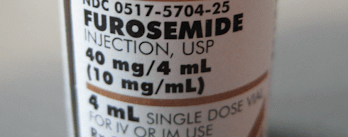
For this episode, Avi reached back to a memory of a teaching conference given by a co-resident during internal medicine residency: furosemide works by non-diuretic mechanisms in the acute setting, providing immediate relief to patients with acute pulmonary edema even before an increase in urine output. Furosemide was introduced as a loop diuretic in 1964Continue reading “Episode 25: Why can furosemide improve pulmonary edema from heart failure almost immediately?”

