Why does Pseudomonas smell like grapes?
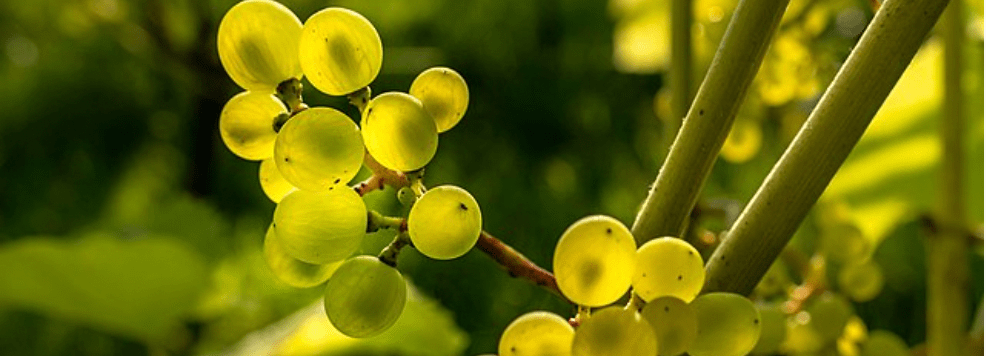
In our last episode, we discussed that most terrifying of organisms, Pseudomonas Aeruginosa (PA), and its role in diabetic foot infections. In this episode, we’ll be exploring a more benign side of PA. If you’ve ever worked with PA in a lab or taken care of a patient with a PA skin infection, you may have noticed a grape-like smell in the air. Yes, that’s right. Unlike many of its fellow bacteria, PA has the honor of smelling like a fruit. And since we’re the Curious Clinicians, we dug into the science behind why this is true!
PA was first isolated in 1882 by a French pharmacist named Carle Gessard. He cultured PA from the blue-green pus present on the bandages of two injured soldiers. Gessard published his discovery in an article titled “On the Blue and Green Coloration that Appears on Bandages.” This is quite an early discovery in the history of microbiology, considering that Robert Koch first provided proof of a single germ (anthrax) directly causing disease in 1876. We don’t know the first person who recognized that PA smells like grapes, but it likely wasn’t very long after it was isolated. In fact, the smell is so distinctive that, in the pre-PCR era, microbiology labs used to use the grape odor to initially determine if something growing in culture was PA.
What we do know, however, is when someone figured out why PA smells like grapes. In 1966, a German chemist took PA that had been growing on agar for three weeks and used thin-layer chromatography to isolate a grape-smelling substance from it. This “odorous substance” turned out to be a volatile compound called 2-aminoacetophenone (2-AA). PA produces 2-AA as a byproduct of the tryptophan catabolic pathway. Although physicians and lab scientists may smell 2-AA when dealing with PA, the larger public may taste it an off-flavor in spoiled white wine. 2-AA is a metabolite that arises post-fermentation and although the smell is almost-pleasant, the actual flavor is described as “acacia blossom, naphthalene note, furniture polish, fusel alcohol, and damp cloth.” Whatever that means, we’re going to assume it’s bad.

“This is all very interesting,” you may be wondering, “but does it matter, at least in a clinical sense?” The answer is actually yes! 2-AA has been studied as a potential biomarker for PA airway colonization in cystic fibrosis. One 2010 investigation compared detecting exhaled 2-AA in a breath test to the traditional respiratory cultures and found that the breath test was 94% sensitive and 69% specific.
2-AA is not just a byproduct, though. It also plays an important role in PA survival in the airway. One study took mice and pre-treated them with 2-AA, and then infected their airway with PA. The results were surprising. Compared to infected control mice who weren’t pre-treated with 2-AA, the 2-AA group had decreased inflammatory cytokine production, but also a 90% survival rate compared to the control group of 10%. This odd combination of dampened immune response but improved mortality implies a sort of co-evolution whereby 2-AA allows PA to thrive and tempers the host immune response enough to prevent self-harm.

This example gets at a somewhat paradoxical facet of infection. It’s easy to think of bacteria as always “wanting” to infect a host as quickly and aggressively as possible (and if you’ve ever taken care of someone with an acute PA bloodstream infection, you know how fast they can go from healthy to needing the ICU). However, the more virulent an infection is, the more likely it is to be flagged by the immune system for elimination. There are times, therefore, where it’s beneficial for a bacteria to be less virulent in order to survive long-term (which factors into the whole concept of the human microbiome). 2-AA helps PA do just that. In animal models, PA strains that produce 2-AA produced fewer virulence factors, but also had increased lifespans. This may explain why PA seems capable of producing both overwhelming acute infections and chronic, asymptomatic ones.
Take Home Points
- The characteristic grape odor that emanates from Pseudomonas aeruginosa results from a tryptophan metabolite called 2-aminoacetophenone (2-AA)
- 2-AA has physiologic relevance in that it modulates airway immune responses to Pseudomonas and may decrease the bacteria’s virulence and increase its lifespan, all of which may contribute to its ability to chronically colonize and infect the airway
- 2-AA also is a source of spoiled white wine flavor
Listen to the episode!
https://directory.libsyn.com/episode/index/id/35359185
CME/MOC
Click here to obtain AMA PRA Category 1 Credits™ (0.5 hours), Non-Physician Attendance (0.5 hours), or ABIM MOC Part 2 (0.5 hours).
As of January 1, 2024, VCU Health Continuing Education will charge a CME credit claim fee of $10.00 for new episodes. This credit claim fee will help to cover the costs of operational services, electronic reporting (if applicable), and real-time customer service support. Episodes prior to January 1, 2024, will remain free. Due to system constraints, VCU Health Continuing Education cannot offer subscription services at this time but hopes to do so in the future.
Credits & Suggested Citation
◾️Episode written by Avi Cooper
◾️Show notes written by Avi Cooper and Giancarlo Buonomo
◾️Audio edited by Clair Morgan of nodderly.com
Cooper AZ, Abrams HR, Breu AC, Buonomo G, . The Grapes of Pseudomonas’ Wrath. The Curious Clinicians Podcast. February 12th, 2025.
Image Credit: Wikimedia
 The Curious Clinicians
stylish! Scientists Discover Potential Breakthrough in Cancer Treatment 2025 exceptional
LikeLike