
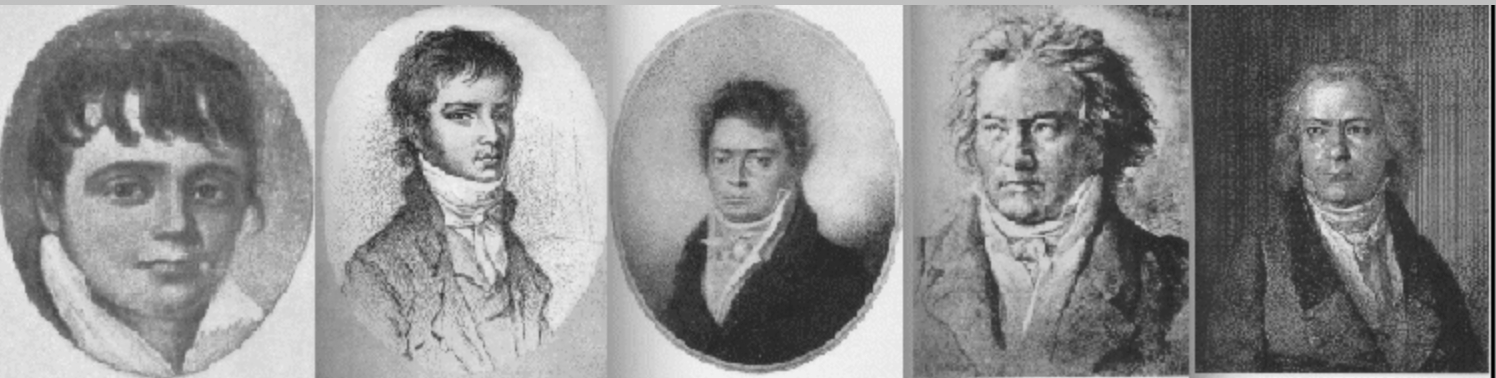
Has the mystery of Beethoven’s deafness finally been solved?
Just as the music of Ludwig von Beethoven is timeless, theorizing about his deafness apparently is also. On episode 72 (Bringing up Beethoven) of The Curious Clinicians, we discussed various theories for why Beethoven gradually lost his hearing, including syphilis, hemochromatosis and, intriguingly, Cogan syndrome, a rare form of vasculitis that can lead to deafness and ocular inflammation. Most theories revolve around Beethoven’s described symptoms (eye inflammation, chronic abdominal symptoms, migratory arthralgias) as well as his autopsy report, which noted sclerosis of the auditory arteries. In light of some exciting new data, we’re going to return to our original differential for the first time ever on the Curious Clinicians, and discuss something that seemed to have been previously excluded. Did Beethoven actually have lead poisoning all along?
In a 2023 article, a research group analyzed the genome of eight locks of hair which supposedly belonged to Beethoven. Of those, five of them had virtually identical genomes, originated from a male of Central European ancestry, and originated in the early 19th century. Combined with reasonable provenance and chain of custody, the authors concluded that these locks almost certainly belonged to Beethoven. One of the remaining locks, the so-called “Hiller lock,” was already known to contain high lead levels. However, the researchers showed that it belonged to woman of mixed North African and Middle Eastern ancestry. The authors concluded that the lead poisoning theory for Beethoven’s deafness had lost its key piece of evidence.

Just a few months ago, a new study was published, one which brings the lead poisoning theory back into consideration. The authors analyzed two of the locks (the ” Bermann” and “Halm Thayer” locks) which the 2023 article had declared authentic. These two locks each contained extremely high lead levels: 250 µg/g and 375 µg/g, respectively (the upper limit of normal is around 4 µg/g). Based on the current CDC conversion formula, Beethoven’s serum lead levels would have been around 70 µg/dL, far greater than normal max of 5 µg/dL.
How did Beethoven get exposed to so much lead? Beethoven was a heavy drinker and the wine he drank may have been “plumbed wine,” meaning it had lead acetate mixed in as a sweetener and preservative (and the corks themselves may have been soaked in lead to provide a better seal). However, one doesn’t have to speculate too much. Until recently, lead was a common component of everything from pipes to paint. Lead is also extremely toxic, and tends to accumulate in the bones over years. It’s not terribly surprising that someone living in the early 19th century had chronic lead exposure.
This raises two questions, though. First: Can lead toxicity cause deafness? Multiple investigations, including a population study and a meta-analysis, have linked chronic lead exposure to accelerated age-related hearing loss. One study showed that the higher serum lead levels are, the lower conduction is through the auditory nerve. Whether through oxidative stress in the cochlea or damage to the nerve itself, lead is an established ototoxin.
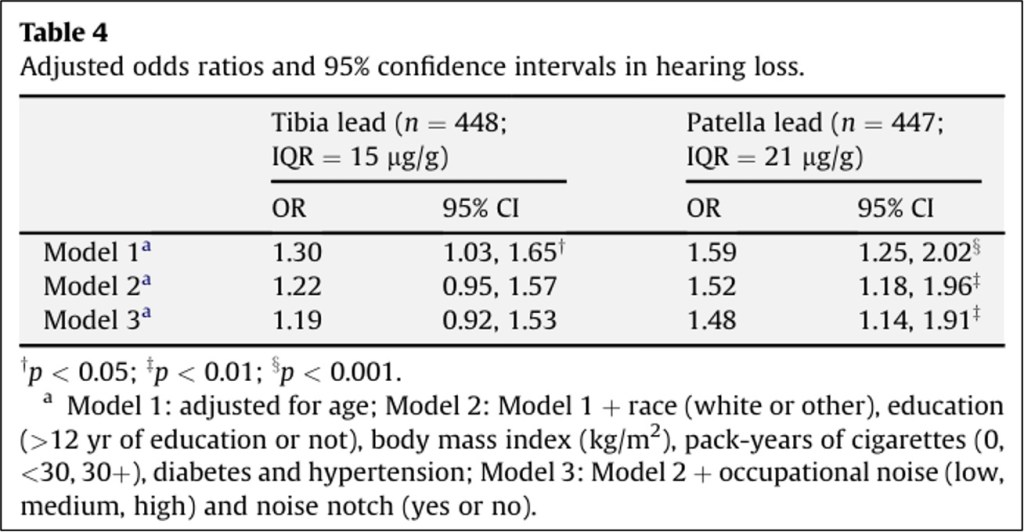
Many of Beethoven’s reported symptoms (chronic abdominal and joint pain) could also have come from lead toxicity. While lead is toxic to the retina, it wouldn’t seem to explain his chronic eye pain.
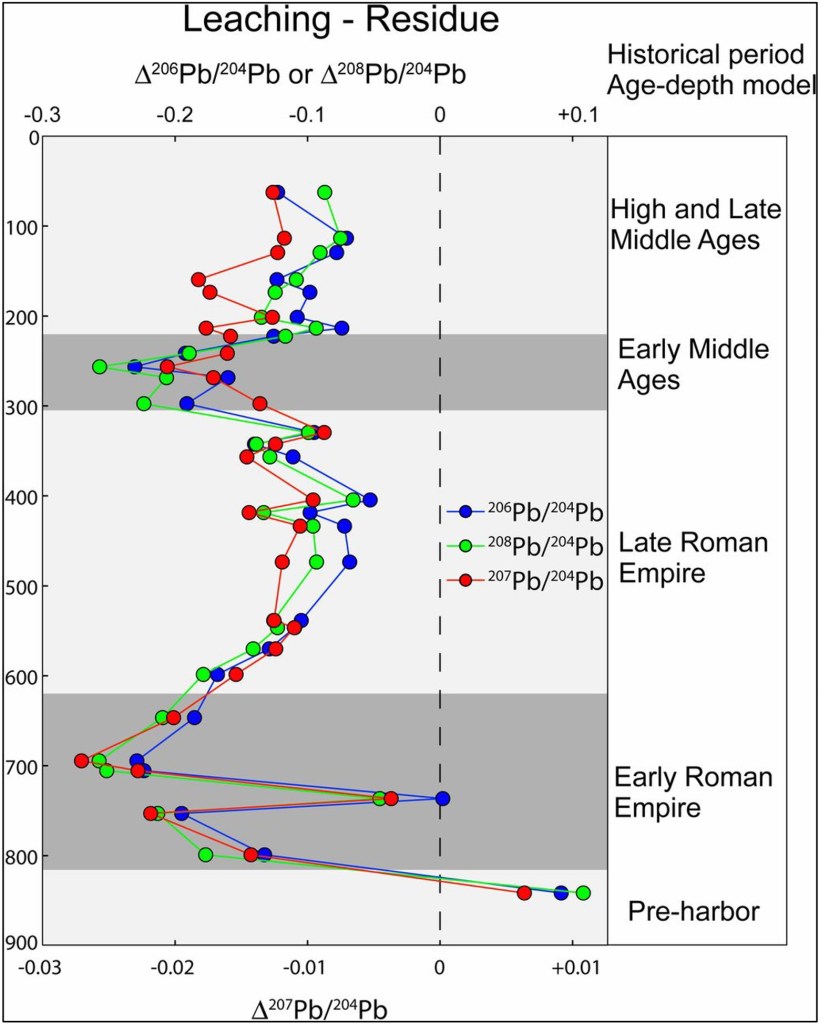
This brings us to our second question, though. Other than maybe wine consumption (which he was hardly alone in), Beethoven doesn’t seem to necessarily have had substantially more lead exposure than anyone else in his era. For millennia, lead exposure has been a common problem. In both ancient and medieval Rome, lead levels in drinking water were high. In 18th and 19th century Europe, symptoms of lead toxicity were apparently quite common, as not only food and water but also medicine was contaminated with lead. Remember the “Hiller” lock? Even though it didn’t belong to Beethoven, it too contained very high lead levels. So although it’s no surprise that Beethoven had symptoms of lead toxicity, it’s also hard to argue that he was somehow unique in this. So it seems plausible, if not likely, that other factors may have contributed to Beethoven’s deafness.
Going back to Beethoven’s autopsy, recall that his doctors found sclerotic auditory arteries which were “thickened and cartilaginous as though stretched over a raven’s quill”, suggesting a focal vasculopathy (which lead poisoning would likely not explain). Furthermore, Beethoven appears to have gone deaf quite early in life (around the age of 30), and as the hair samples we have are from closer to the time of his death at 56, we cannot know if he had high lead levels early enough in life to contribute to hearing loss.
Although it’s fun to apply Occam’s razor and try to find a singular cause for all of Beethoven’s maladies, we should remember Hickam’s dictum: Patients can have as many diseases as they damn well please, which very well may apply in Beethoven’s case.
Finally, as we covered in Bringing up Beethoven, in the 2023 genetic study the researchers found that he was compound heterozygous for 2 HFE gene mutations, which can cause hemochromatosis. As we touched on previously, the study authors emphasized that because of the low penetrance of HFE gene mutations, we can’t know if he was clinically iron overloaded and had hemochromatosis or not. We couldn’t find any known strong association between hemochromatosis and chronic hearing loss. But an interesting case-control study out of Italy published in 2015 suggested that perhaps dysregulated iron homeostasis in the inner ear caused by a specific ferroportin gene polymorphism might predispose to hearing loss. There’s also evidence that HFE gene variations are associated with higher lead levels in lead smelter workers, so perhaps this placed Beethoven at greater risk for symptomatic chronic lead poisoning. Lots still to ponder with Beethoven and the ever-evolving mystery of his deafness.
Take Home Points
- Chronic lead poisoning is associated with sensorineural hearing loss
- Mechanisms of lead-toxicity-induced hearing loss include cochlear toxicity and neuronal damage
- Lead exposure was common through most of history, and Beethoven has been confirmed to have had high lead levels in his body toward the end of his life
Listen to the episode!
https://directory.libsyn.com/episode/index/id/32471702
CME/MOC
Click here to obtain AMA PRA Category 1 Credits™ (0.5 hours), Non-Physician Attendance (0.5 hours), or ABIM MOC Part 2 (0.5 hours).
As of January 1, 2024, VCU Health Continuing Education will charge a CME credit claim fee of $10.00 for new episodes. This credit claim fee will help to cover the costs of operational services, electronic reporting (if applicable), and real-time customer service support. Episodes prior to January 1, 2024, will remain free. Due to system constraints, VCU Health Continuing Education cannot offer subscription services at this time but hopes to do so in the future.
Sponsor
Freed is an AI scribe that listens, transcribes, and writes medical documentation for you. Freed is a solution that could help alleviate the daily burden of overworked clinicians everywhere. It turns clinicians’ patient conversations into accurate documentation – instantly. There’s no training time, no onboarding, and no extra mental burden. All the magic happens in just a few clicks, so clinicians can spend less energy on charting and more time on doing what they do best. Learn more about the AI scribe that clinicians love most today! Use code: CURIOUS50 to get $50 off your first month of Freed!
Credits & Suggested Citation
◾️Episode written by Avi Cooper
◾️Show notes written by Giancarlo Buonomo and Avi Cooper
◾️Audio edited by Clair Morgan of nodderly.com
Cooper AZ, Abrams HR, Breu AC, Buonomo G,. Beethoven Redux. The Curious Clinicians Podcast. August 7, 2024.
Image Credit: Caltech
 The Curious Clinicians